Proper accounting for the whole school — not just fees
A real chart of accounts, revenue and expenditure, budgets, vendors, assets and loans, with financial statements your board can rely on.
What gets in the way today
- Income and spending tracked in separate books
- Budgets agreed at the start of the term and never checked again
- Vendor payments and staff loans followed up on paper
- Financial statements put together manually for the board
What changes
- Every naira recorded against a proper chart of accounts
- Budgets and spending compared as you go
- Vendors, loans and assets managed in one place
- Financial reports generated from the same records
Everything included in Finance & Accounting
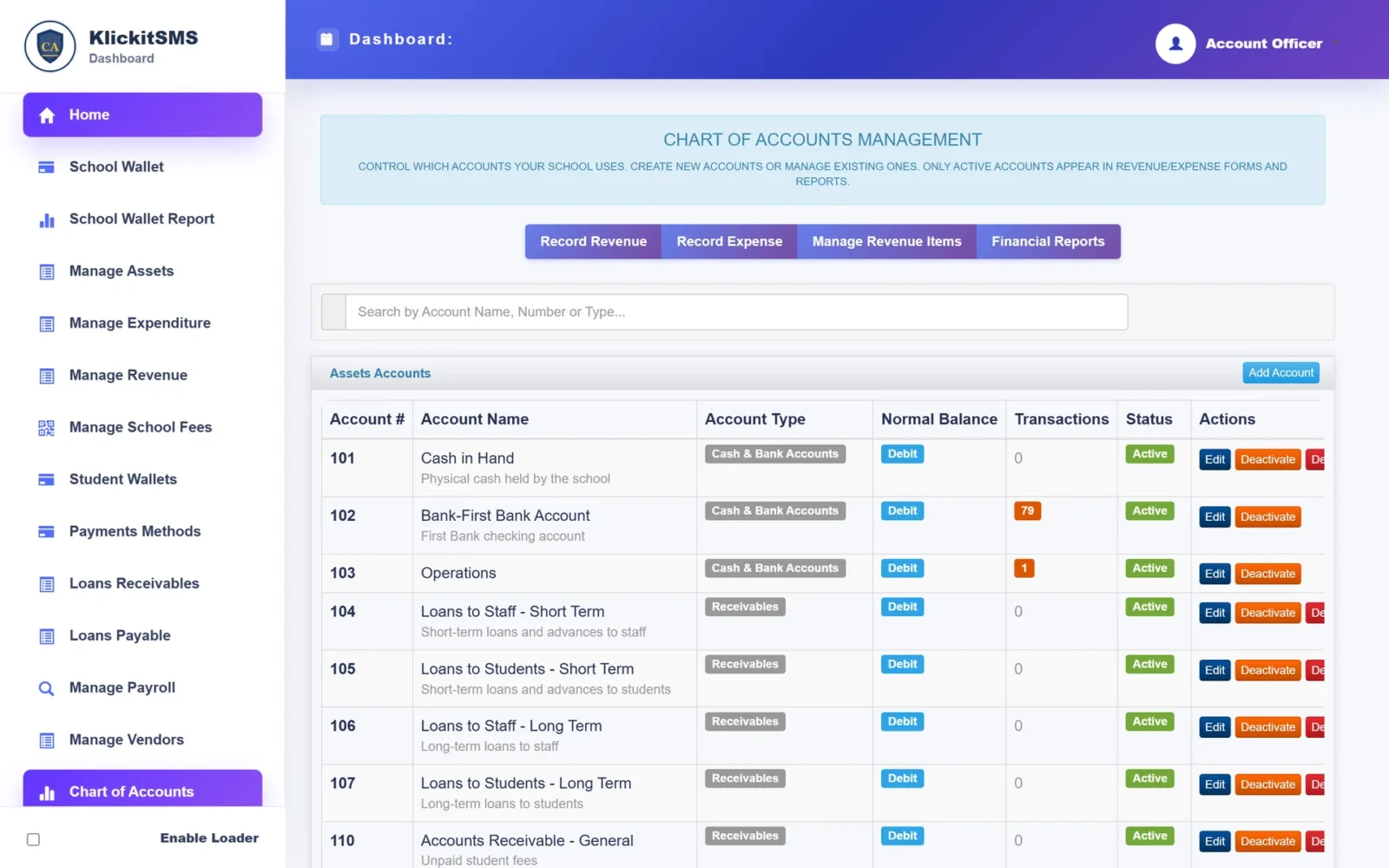
Chart of accounts
Assets, liabilities, income and expense accounts you control.
Revenue management
Revenue items, income categories and store sales.
Expenditure management
Record expenses against categories and items, with audit logs.
Budgets
Budget categories and items, with budget-versus-actual analysis.
Vendors and payables
Vendor records, accounts payable and vendor payments.
Loans and receivables
Loans payable and receivable loans, with payment schedules.
Fixed assets
Asset register, purchases and depreciation.
Financial reports
Ledger, trial balance, balance sheet and other financial statements.
Stores and inventory
Stock items, sales and non-saleable distributions.
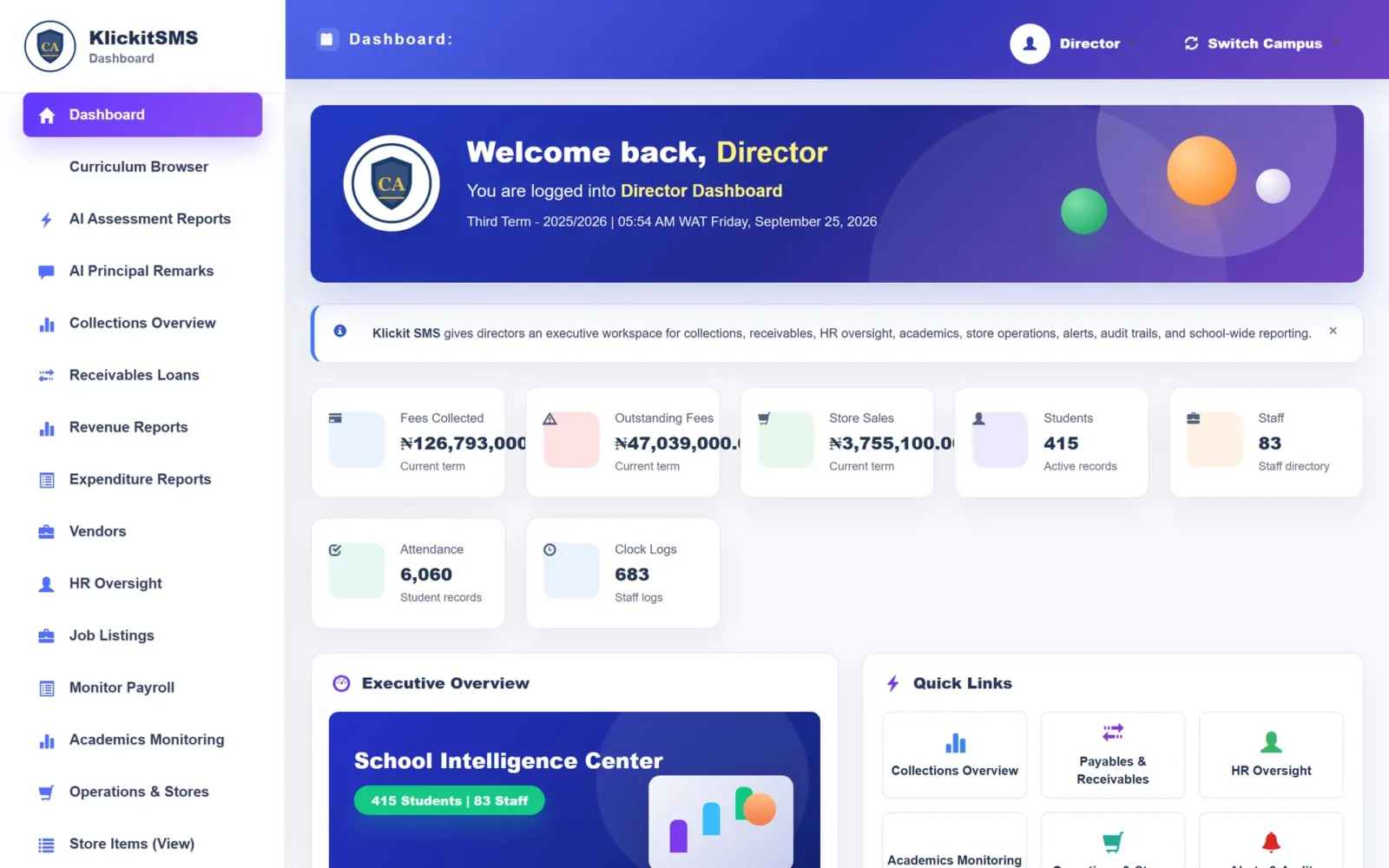
The director sees the money at a glance
Fees collected, outstanding balances, store sales and staff numbers on the director’s dashboard.
Works hand in hand with
Because every module shares one record, Finance & Accounting feeds and is fed by the rest of the platform.
Frequently asked
Is this real accounting or just fee tracking?
Are changes to income and expenses tracked?
See Finance & Accounting in action
Book a guided demo and we’ll walk through finance & accounting using a school structure like yours.